Aller au contenu

Full management plan

Your property, runfrom the first message to the last clean.

You stay the landlord and you keep control. We take everything else: the listing, the pricing, the guests, the check-ins, the cleaning, the linen, the breakdowns and the paperwork. You receive what the property earns, less our fee.

Where the difference comes from

We don't promise a percentage.We show you the levers.

Plenty of operators advertise «+30 % income» without saying compared to what, or how. We'd rather explain what we actually act on. You can judge for yourself whether it's worth a fee.

01

The listing

What a guest sees before they click

A listing's ranking depends on a series of signals most owners don't know exist. We work on the title and the lead photograph, which decide the click-through rate. We complete the amenities inventory line by line, because every amenity declared puts the listing into one more search filter. We tune the cancellation policy, the minimum stay and the calendar, all of which weigh on visibility.

  • Professional photo shoot, at our expense
  • Title and description reworked around real searches
  • Exhaustive amenities inventory, not an approximate one
  • Published across several platforms at once

02

The property

What turns a good rating into an excellent one

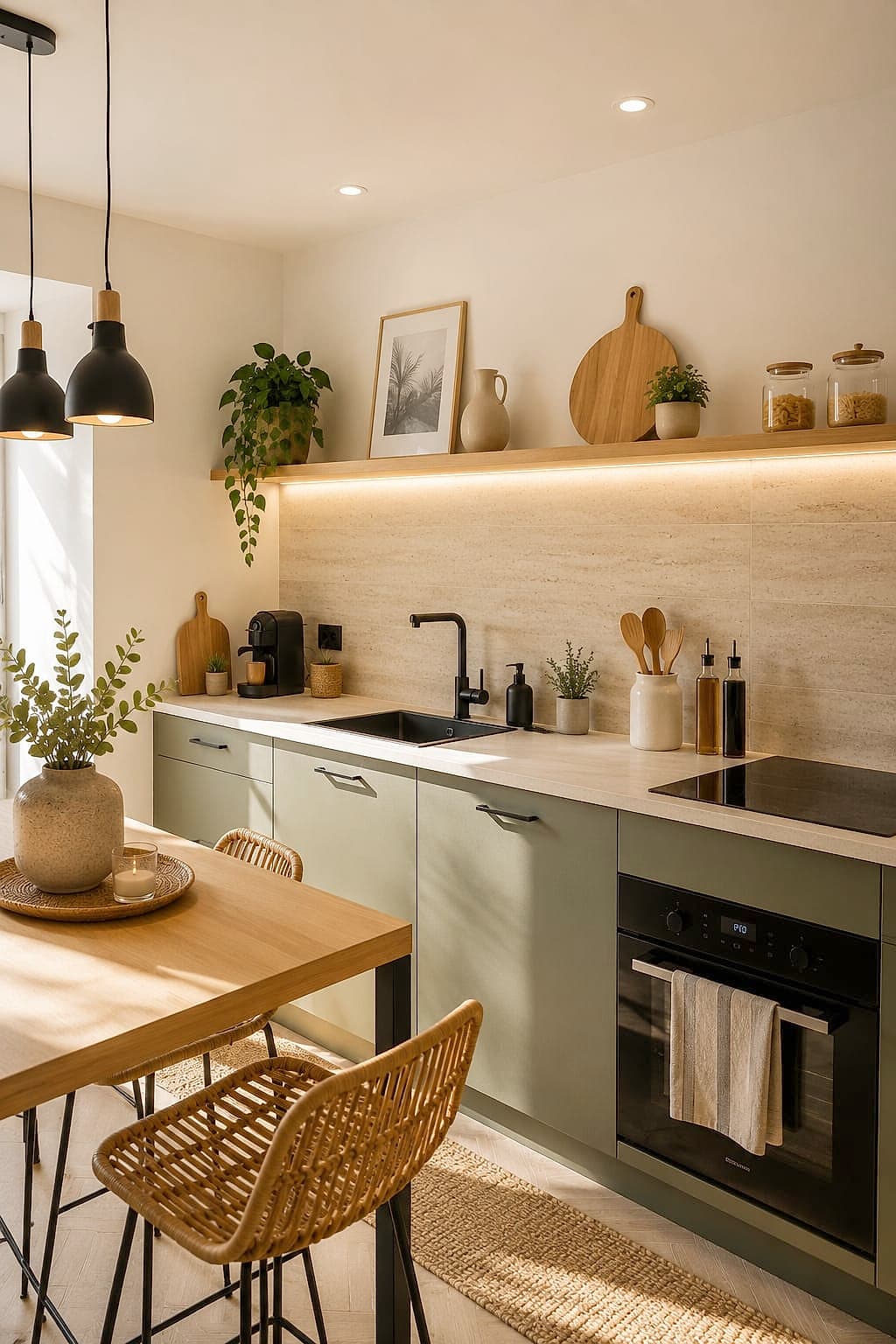
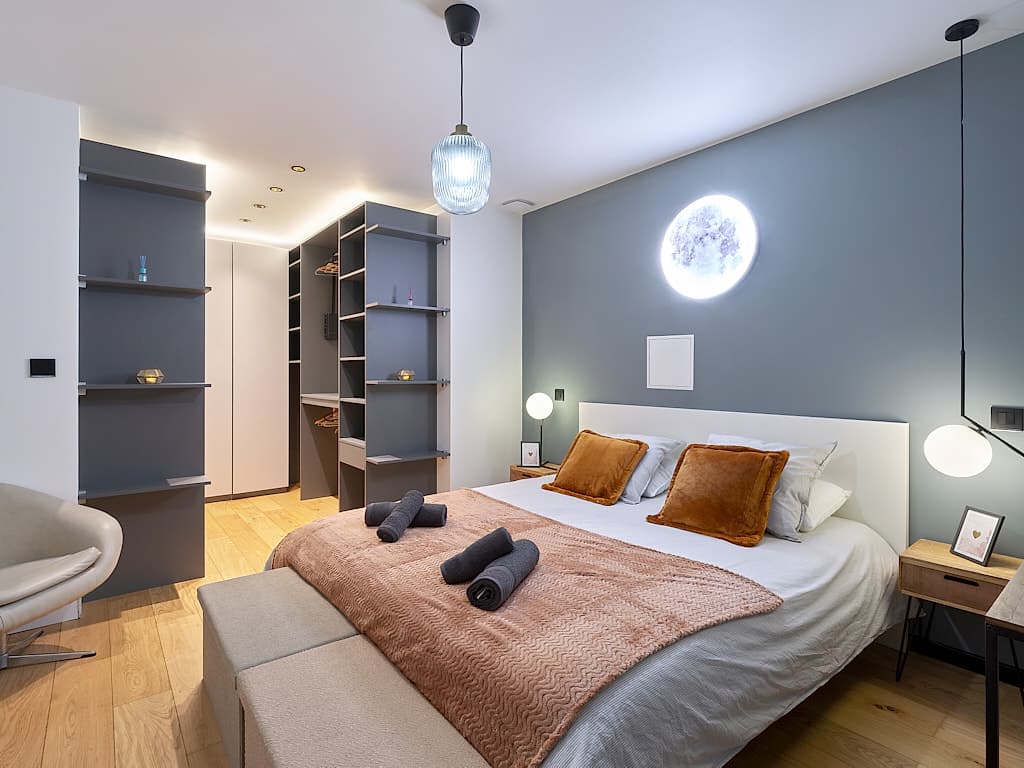
A property people like rents for more and rents more often. We identify what's missing and what grates: bedding, lighting, storage, kitchen equipment, connectivity, sound insulation, self check-in. Some fixes are minor and pay for themselves immediately. Others deserve a refresh, which we sometimes cover entirely ourselves.

  • Property assessment before going live
  • Refurbishment at our expense, or shared
  • Equipment completed to widen the guest pool
  • Self check-in installed to remove the timing constraint
03

The price

The most underrated lever, by a distance

A flat annual rate loses money in both directions: too expensive in quiet weeks, when the property sits empty, and far too cheap during a trade fair or a local event. We adjust continuously for season, day of the week, events, competition and booking lead time. You set a floor price we never cross.

  • Pricing reviewed continuously, not once a year
  • Local and cross-border events factored in
  • Minimum stays adapted to the season
  • Floor price set by you, respected by us

These three levers all act on one thing: revenue per available night. It's the only figure that matters, because it combines the rate achieved with how full the property is. Filling it at any price achieves nothing.

Deux intervenantes Cosy'Part en tenue, en cours de remise en état d'un séjour

Housekeeping

Cleaning isn't a detail.It's the number one cause of mediocre reviews.

A guest will forgive a tired sofa. They will not forgive a hair in the shower. We work with cleaning teams trained in short-let turnovers, which is not the same job as domestic cleaning: there's a protocol, a time, an order of operations, and an inspection.

Trained teams, not someone found the night before

Our cleaners know the turnover protocol and work on our properties regularly. It isn't a different contractor for every stay.

A photographic check at every turnover

The property's condition is documented before each arrival. That's what lets us establish damage, get it covered, and show you what actually happened.

Linen handled end to end

Washing, pressing, spare stock. A clean set is always available, including when two departures fall on the same day.

Wear tracked and pre-empted

Bedding, towels, crockery, small appliances: anything getting tired is replaced before a guest mentions it in a review.

Where your property appears

Several channels,one calendar.

A property listed on a single platform cuts itself off from part of the demand. We publish across several channels at once, synced by a channel manager that makes double bookings impossible.

Booking.com
Abritel
Airbnb
Coming soon

Our own booking channel

We're currently building our own direct booking platform. It will take stays without platform commission — meaning a higher net figure for you at the same price paid by the guest. It will be available shortly for every property we manage.

The real sum

On your own,or with us.

The right question isn't «what does the management company take». It's «what's left at the end, and how many hours did it cost me».

What you collect

On your ownEverything, less platform fees

With Cosy'PartEverything, less one single fee

Who stays in control

On your ownYou decide everything, all the time

With Cosy'PartFloor price, blocked dates and account access stay yours

Time spent each month

On your own8 to 15 hours, at unpredictable moments

With Cosy'PartAs long as it takes to read a statement

Pricing

On your ownSet by hand, rarely revisited

With Cosy'PartAdjusted continuously to demand

Distribution

On your ownUsually Airbnb alone

With Cosy'PartAirbnb, Booking, Abritel

Answering guests

On your ownWhenever you're free

With Cosy'PartUnder an hour, 7 days a week

Cleaning between stays

On your ownTo recruit, reschedule and re-inspect

With Cosy'PartTrained teams, coordinated and inspected

A breakdown on Sunday night

On your ownYou

With Cosy'PartUs

Regulatory compliance

On your ownYour responsibility

With Cosy'PartChecked, filed and kept current

If the property sits empty

On your ownYou lose the income

With Cosy'PartGuaranteed rent: you're still paid

The time figure reflects what owners managing a short let themselves report. It varies a great deal with the size of the property and the season.

If your property is round the corner, you have the time and you enjoy it, manage it yourself — we'll tell you so plainly. If you live far away, if you have a job, or if the mental load outweighs the gain, that's where we're worth something.

Have my listing audited

The real workload

Six families of tasks,per property, every month.

58

tasks per property, month after month

These are only the ones we have listed. Each of them ends up on somebody's desk: yours, or ours.

  • Before arrival
    10
  • During the stay
    9
  • Between stays
    10
  • The money
    10
  • Compliance and insurance
    10
  • The background work
    9
Not one of these tasks is hard. Their number is.

The invisible work

What we do whileyou are not watching

From the outside, running a short-let looks like this: a listing goes online, money lands in your account at the end of the month. Here is everything in between. This is not a brochure, it is one month of actual operations.

  • Reopen the rate grid every week and fix the nights nobody is booking: a Wednesday in November does not sell at a Saturday-in-July price.
  • Spot what is happening in town three months out — a trade fair, a match, a festival — and raise rates before everyone else does.
  • Adjust the minimum stay so two unsellable nights are not stranded between two bookings.
  • Read every booking request, look at the profile, the party size and the reason for the trip, and decline the ones that smell like a party.
  • Verify the guest's identity and get the rental agreement signed when the length or the amount calls for it.
  • Set a different access code for every stay, live at check-in time and dead at check-out.
  • Send arrival instructions with the exact address, the floor, a photo of the door and directions, in the guest's own language.
  • Answer the pre-arrival questions: parking, a 1 a.m. arrival, a cot, a dog, dropping bags off early.
  • Count the stock before every arrival: coffee, loo roll, bin bags, washing-up liquid, dishwasher tablets, spare bulbs.
  • Reread the property notes before each high season: roadworks outside, a bus route withdrawn, a changed entry code, and the instructions are now wrong.
  • Reply in under an hour, Saturday night and bank holidays included: platforms measure response time and it feeds straight into how often the listing is shown.
  • Take the call from the guest who cannot open the key box, at 11 p.m., on a Sunday, and get them inside before they start writing the review.
  • Get a plumber out on a Friday evening for a dead boiler, or rehouse the guest when it cannot be fixed overnight.
  • Talk someone through restarting the heating on a January morning by video message, rather than sending a person out to press a button.
  • Walk a guest through an induction hob, an integrated washing machine or an air-conditioning remote they have never used.
  • Take the neighbour's message at midnight and get the noise down straight away, politely, before it reaches the building manager a month later.
  • Handle a request to stay one more night when the next guest arrives at 3 p.m. tomorrow: say no, or move the entire cleaning schedule.
  • Judge a mid-stay refund request and tell a genuine fault apart from an attempt.
  • Release a lock remotely or bring a spare key when someone locks themselves out at dinner time.
  • Fit the clean between an 11 a.m. departure and a 3 p.m. arrival, with two other properties on the same team's list that day.
  • Rebuild the whole schedule when the cleaner falls ill on a Saturday in July.
  • Check the work in photos every time: bed made, shower seals, oven empty, bins out, remotes back where they belong.
  • Run two full sets of linen per bed, otherwise one late check-out blocks the entire day.
  • Pull stained towels and greyed sheets out of rotation: a guest never mentions it, they put it in the review.
  • Buy and carry in the missing consumables before the next arrival, including the three things you only discover on site.
  • Check that everything still works: bulbs, wifi, smoke alarm batteries, a slow drain, a window that no longer shuts.
  • Do the repairs that are not worth a tradesman's call-out: a hinge, a curtain rail, a bead of silicone, a chair leg.
  • Find the charger, the passport or the child's toy left behind, put it aside and arrange to post it back.
  • Spot damage during the check and photograph it with a date, before the next clean makes it impossible to prove.
  • Track payouts that land on different days and at different intervals depending on the platform.
  • Match every booking to its payout: what actually arrives never equals the price the guest saw.
  • Recalculate platform commission, service fees and applied discounts to know what the night really earned.
  • Collect the tourist tax, check the rate the council has voted, and remit it on time — some platforms collect it, some do not, and nobody warns you.
  • Take and release deposits, or decide on a deduction when something is broken and the guest disputes it.
  • Chase a platform when a payout does not land, or when a guest opens a payment dispute weeks after leaving.
  • Handle a last-minute cancellation: apply the policy, decide whether to make a gesture, and get the nights back on sale the same day.
  • Work out a pro-rata refund when a stay is cut short for a reason the policy covers.
  • Produce the monthly statement: nights sold, gross revenue, commission, costs, net.
  • Pay the owner on a fixed date, with the supporting document alongside it, usable as it stands by an accountant.
  • File the council declaration and obtain the registration number where the council requires one.
  • Display that number on every listing and every platform: leaving it off is penalised, and it is easy to miss.
  • Watch the night counter where the property is capped, and close the calendar before the cap is reached.
  • Check whether the council requires change-of-use consent, and put the application together when it does.
  • Go back through every listing each time local rules move: display obligations change without notice.
  • Check that the insurance policy actually covers short-term letting, not just occupation of the home.
  • Report a claim, gather the quotes and follow it through to the payout.
  • Build the damage claim with the platform inside its deadline: dated photos, replacement invoice, message sent to the guest before the claim is filed.
  • Keep the paperwork — agreements, inventories, message threads, tradesmen's invoices — for the day there is an inspection or a dispute.
  • Hand the owner the certificates and the annual summary their accountant will ask for.
  • Track what comparable properties nearby are doing: their rates, their blocked dates, the photo they lead with.
  • Read every review in full, four-star ones included, and find the sentence that explains the missing star.
  • Reply publicly to reviews, above all the bad ones: the reply is read by future guests, not by the person who wrote it.
  • Rewrite the listing title and text when the words people search with change.
  • Reshoot the photos after new paint, new furniture or new bedding: an image that no longer matches the flat produces lukewarm reviews and nobody can say why.
  • Follow local rulings and anticipate what a new rule will require, before it takes effect.
  • Keep the supplier network alive — plumber, electrician, locksmith, laundry — and hold rates that still stand in peak season.
  • Decide each season between short and medium-term letting: a winter month let to a professional on assignment can beat fifteen scattered nights.
  • Redo the numbers annually: what the property cost, what it earned, and what has to change for next season.

Now let us go back to the price

Added together, these tasks come to several hours a week, per property. They almost never land when you happen to be free: a Sunday evening, a bank holiday, the middle of your own holiday.

If you do not hand them over, they do not go away. They come back to you one at a time, without warning, and you are the one picking up the phone at 11 p.m.

We are paid a percentage of what the property takes. Empty property, no commission. We only earn if it runs, and we earn more if it runs at a good rate: which is precisely your interest too.

Where the money goes

How many hands your property's moneypasses through.

  1. GuestThe advertised price, paid in one go

    Nights, cleaning fee and tourist tax included.

  2. Platform commission and service feesThe platform
  3. PlatformWhat it pays out

    The payout lands on different days and at different intervals depending on the platform.

  4. Our fee, taken on what the property actually takes. Empty property, no fee.Cosy'Part
  5. Cosy'PartWhat we collect for you

    We match every booking to its payout: what actually arrives never equals the price the guest saw.

  6. Charged at cost, with the receipt: tradesmen, replacement furniture, building work.The supplier — we take no margin, you get the original invoice
  7. OwnerThe net figure, with you

    Paid on a fixed date, with the month's statement: nights sold, gross revenue, commission, costs, net.

Only one of these three deductions is ours. The other two never pass through us.

What it costs

The percentage means nothing.The net figure does.

A firm charging 15 % can leave you with less than one charging 22 %: it all depends on what gets billed on the side. Here's our line, item by item.

Covered by our fee

  • Listing creation and optimisation
  • Professional photography
  • Continuously adjusted pricing
  • Multi-platform distribution
  • All guest communication
  • Check-ins, check-outs, key handovers
  • Cleaning and linen coordination
  • Minor maintenance and everyday callouts
  • Filings, tourist tax, registration number
  • Itemised monthly statement

Paid by the guest

  • Cleaning fee between stays
  • Local tourist tax

Charged at cost, with the receipt

  • Replacing furniture or appliances
  • Building work and renovation
  • Tradesman callouts (plumber, electrician)
  • Consumables beyond the welcome pack

We take no margin on the cleaning fee charged to guests or on tradesman callouts: you get the original invoice.

Compliance

It's no longer optional,and it's expensive.

Here are the five rules that apply, and what we do in your place.

  1. €10,000Listing published without a registration number.

    Law no. 2024-1039 of 19 November 2024, art. L.324-1-1 of the Tourism Code

  2. €15,000Night cap exceeded.

    Art. L.324-1-1 of the Tourism Code

  3. €100,000Change of use without authorisation, per property.

    Art. L.631-7 and L.651-2 of the Construction and Housing Code

Maximum exposure, drawn to scale: change of use is ten times the missing registration number.

Registration number now mandatory

Since 20 May 2026, every furnished holiday let must be declared and registered through a national online service, and the number must appear on the listing.

A fine, doubled for a false declaration.

We file the council declaration, obtain the number and display it on every one of your listings.

Law no. 2024-1039 of 19 November 2024, art. L.324-1-1 of the Tourism Code

Night cap lowered

A main residence cannot be let more than 120 nights a year — and a council can now lower that to 90 by resolution. Lyon did exactly that on 1 January 2026.

A civil fine.

We check the cap your council has voted, we watch the counter and we close the calendar before it is reached.

Art. L.324-1-1 of the Tourism Code

Change of use

Turning a home into a holiday let requires the mayor's authorisation in many councils, sometimes with a compensation requirement. Annecy and Chamonix enforce it.

A fine per property.

We put the application together where it is required. And where it will not go through, we tell you before you sign.

Art. L.631-7 and L.651-2 of the Construction and Housing Code

Energy rating required

An authorisation request must come with an energy certificate rated A to E. From 1 January 2034 the minimum becomes D: E, F and G properties will be excluded.

Authorisation refused.

We check your property's rating before filing anything: there is no point building a case that will be turned down.

Art. L.324-1-1 of the Tourism Code

Tax relief cut

For an unclassified holiday let, the flat-rate deduction has dropped to 30 %, with a €15,000 revenue threshold. It used to be 50 % and €77,700. Getting the property officially classified is once again the main legal lever.

Noticeably heavier tax on the same income.

We get your property officially classified, which takes the deduction back to 50 % and the ceiling to €77,700.

impots.gouv.fr, 2025 income declared in 2026

And the rest, without you having to think about it

  • Collecting and remitting tourist tax
  • Checking that your insurance actually covers short-term letting
  • Annual summary ready for your tax return
See what applies where I am

General information, current as of 19 August 2026, sourced from official texts. Not personalised legal advice.

This plan isn't the one for you?

You want to carry no risk at all: not the empty weeks, not the damage, not the swing from one month to the next. We take the lease and pay you a fixed rent, paid even while the property sits empty.

See guaranteed rent

You're still weighing up the three. The comparison puts side by side who carries the risk, what income to expect and how long you're committed for.

Compare all three plans

Frequently asked

Management: the questions we get asked

French management companies typically charge between 15 % and 30 % of rental income, clustering firmly around 18 to 25 %. The rate depends mainly on scope: remote management without cleaning sits at the bottom of the range, full management at the top.Market survey, August 2026

The most common rate in France is 20 %. But a percentage on its own tells you nothing: you need to check the basis of calculation (gross income, or net of platform commission) and above all what gets billed separately. A firm at 15 % can leave you with less than one at 22 %.

Not necessarily. A low headline commission often comes with cleaning, linen, consumables and maintenance billed on top. The only figure that matters is what actually reaches your account over twelve months. Ask for a sample operating statement before you sign anything.

In the vast majority of cases the guest does, through the platform's cleaning fee: neither the owner nor the management company absorbs it. Budget €30 to €50 for a studio, €50 to €70 for a one-bedroom, €60 to €90 for anything larger.

With most operators, yes: between €300 and €1,000, covering the visit, the photo shoot, listing creation and going live. At Cosy'Part those fees are zero. We only make money once your property does.

A company that runs a short-let property in the owner's place: creating and optimising the listing, pricing, guest communication, check-ins and check-outs, cleaning, linen, maintenance and reporting. The owner remains the owner and receives the income net of commission.

No, and that's precisely the point of the service. The management company provides the local physical presence — greeting guests, cleaning, callouts — while you follow the activity remotely through statements and account access. Many of our owners don't live in the region at all.

Expect seven to fourteen days between signing and going live: visit and inventory, photo shoot, listing copy, pricing setup, self check-in installation and the council declaration. First bookings usually follow within a few days of publication.

Yes. A professional listing goes out simultaneously on Airbnb, Booking.com and Abritel, through a channel manager that syncs calendars and prevents double bookings. Multi-platform distribution is the single biggest driver of occupancy, ahead of price.

We do, using a dynamic pricing tool that adjusts rates for season, local events, competition and booking lead time. You set a floor price we never go below, and you keep control of it throughout.

Yes, with thirty days' notice. Your platform accounts are open in your name from day one, so you leave with the listing, the photographs and the review history. Some operators create the listing under their own name and keep it: always check this point.

A main residence cannot be let as a furnished holiday home for more than 120 days per calendar year, save for work obligations, health reasons or force majeure. Since the loi Le Meur, a council may lower that cap to 90 days by reasoned resolution.service-public.fr, sheet F33175

A civil fine of up to €15,000, imposed by the president of the judicial court at the council's request. The council can require the owner to produce a count of nights let, with one month to respond.Article L.324-1-1 of the Tourism Code

Converting residential premises into a furnished holiday let is a change of use requiring the mayor's prior authorisation in affected councils. Some add a compensation requirement. The fine can reach €100,000 per property converted without authorisation.Art. L.631-7 and L.651-2 of the Construction and Housing Code

Since the loi Le Meur, an application for authorisation must include an energy certificate rated A to E, and this holds until 31 December 2033. From 1 January 2034 the minimum rises to D, which excludes ratings E, F and G.Article L.324-1-1 of the Tourism Code

Usually not: most household policies explicitly exclude short-term letting. The cover offered by booking platforms is no substitute, as it carries caps and exclusions. A dedicated holiday-let policy is necessary, and we check yours before going live.

Only under the actual-expenses regime, where it is deductible like cleaning, insurance, loan interest and depreciation. Under the simplified regime the flat-rate deduction replaces any deduction of real costs. Choosing correctly between the two regimes is often the first saving to make.

Next step

Tell us where your property is.We'll tell you what it can earn.

A costed study, specific to your property and your local council. You get it within 48 working hours. Do whatever you like with it, including nothing.

Free. No commitment. No automated follow-ups.