Income doesn't collapse all at once
On a standard let, one departure empties the property completely. In a four-bedroom house share, one departure costs a quarter of the income, and only until the room is re-let.
House share plan
We turn your property into a furnished house share and manage it room by room. One person leaving no longer empties the whole property, and the income stays steady all year.
There are rooms available in Annemasse.
This page is for owners. If you're looking for a room to live in, the listing is right here.
Why a house share
On a standard let, one departure empties the property completely. In a four-bedroom house share, one departure costs a quarter of the income, and only until the room is re-let.
A year-round furnished house share is not a holiday let: it escapes the 120-night cap, the change-of-use requirement and the registration number. In councils that have tightened their rules, it's often the only intensive use still available.
Students, young professionals, people relocating, cross-border workers. In Annemasse as in Lyon, demand for a properly managed furnished room far outstrips supply.
The sum of the room rents exceeds what the same property would fetch let as a single unit. That's mechanical, and it's what pays for the management.
Two kinds of space
That's what makes the model what it is, and what makes it demanding: the income comes from the bedrooms, but how long the house share lasts is settled in the shared areas.
Each room has its own lease, its own inventory, its own move-in and move-out dates. It is the property's unit of income. It has to be furnished, have storage, and lock. Otherwise it lets for less, and it empties more often.

A furnished room, ready to let

Closed storage, not cardboard boxes

Daylight: it shows in the listing
Kitchen, living room, shower room: used several times a day, by people who didn't choose each other. That's where tensions get settled, and where a property falls apart within a season if nobody looks in.

A kitchen sized for several people

A living room where several can sit down
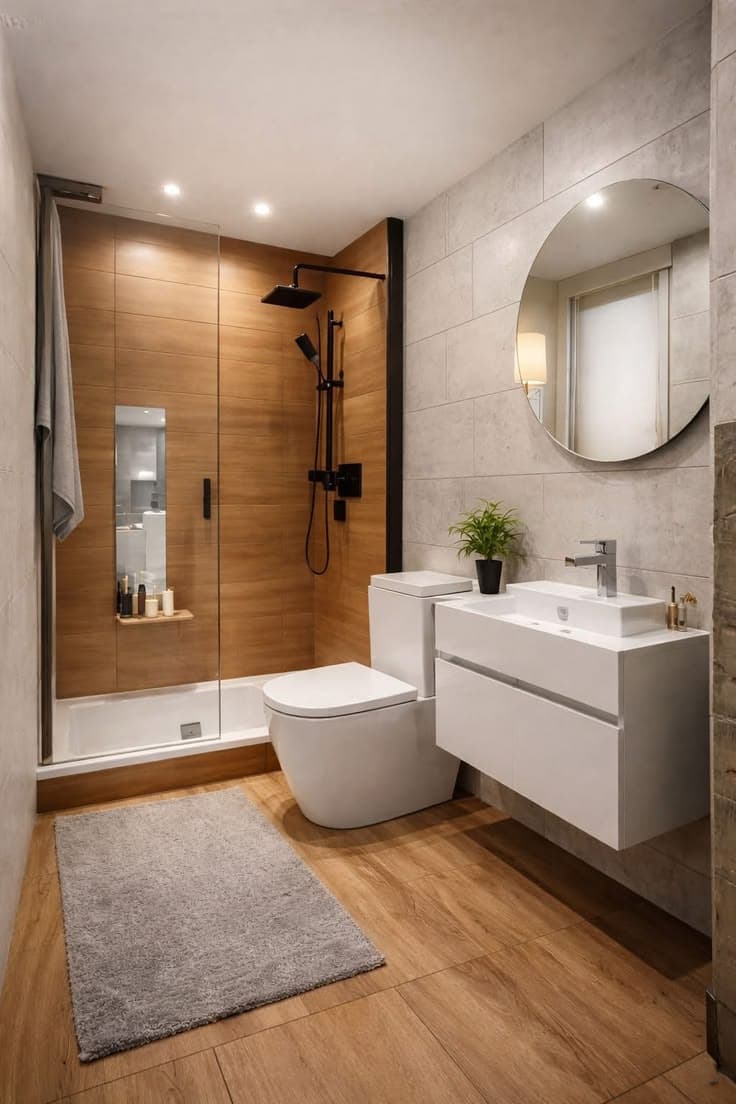
A shower room that keeps up
What actually changes
Same property, same city, same furniture: the moment there are several leases and several people, almost every management task changes in kind.
Who lives there
Standard furnished letOne household, already formed before they arrive.
Managed house shareSeveral people who didn't choose each other. Every arrival shifts the balance of the group.
What a departure costs
Standard furnished letThe property empties completely, and the income with it.
Managed house shareOne room frees up. The others keep paying while it's re-let.
Selection
Standard furnished letOne application to check.
Managed house shareOne application to check, and a profile to fit alongside the people already there.
The contract
Standard furnished letA single lease.
Managed house shareJoint lease or individual leases. That choice, made at the start, sets what you can recover if someone stops paying.
Inventories
Standard furnished letOne check-in, one check-out.
Managed house shareA check-in and check-out per room, plus keeping track of the shared areas.
Bills
Standard furnished letOne reconciliation, one person to deal with.
Managed house shareShared consumption to split between occupants who moved in on different dates.
Wear and tear
Standard furnished letFamily use, spread across the day.
Managed house shareKitchen, living room and shower room are used several times a day. They're the first to go.
Day to day
Standard furnished letYou hear nothing as long as nothing goes wrong.
Managed house shareCleaning the shared areas, noise, guests: someone has to rule on it, or the housemates leave instead.
A comparison of management models, for an equivalent property. It implies no level of income: that depends on the property, the city and the number of rooms.
What we do
House shares have a reputation for being simple. They aren't: it's a job of selection and mediation far more than of cleaning.
A bad housemate doesn't just cost you their rent: they drive the others out. We check income, guarantees, and how the profile fits the group already in place, and we turn down applications that don't hold up.
Choosing between a joint lease and individual leases depending on your objective, drafting, check-in and check-out inventories room by room, deposits, insurance, service charge reconciliation.
Cleaning the shared areas, noise, the guest who moves in. Those come to us, not to you. That's precisely what wears down an owner managing alone.
A departure should never leave more than a few weeks of void. We start looking before the room is even empty.
Kitchen, bathroom, living room: shared spaces degrade fastest. Regular attention stops a property deteriorating within a single season.
How it works
Six stages, four of which happen before a single housemate has viewed anything. That work is what decides whether the house share holds together or turns over constantly.
Floor area, how the rooms are laid out, the city. We tell you straight away how many bedrooms it can carry without becoming unliveable — and whether it's better not to divide it at all.
What can become a bedroom, what has to stay shared, what needs work before it goes on the market. A door or a water point in the right place changes what the property is worth.
Joint lease or individual leases depending on your objective, drafting, insurance, deposits. This is where what you can recover, if someone stops paying, is decided.
Furnished bedrooms, equipped shared areas, closed storage, photographs. A bare room doesn't let for the same rent, or as quickly, as one that's ready to move into.
Advertising, sifting applications, checking income and guarantees, viewings. We turn down applications that don't hold up, including when the room is empty.
Rents, bills, upkeep of the shared areas, arbitration, notices and replacements. You get an update on your property; you don't get the phone calls.
What worries you
Nobody calls us saying “I'd like to optimise my yield per square metre”. People call because they're dreading one of those three things.
“What if one of them stops paying?”
It's settled beforehand, not afterwards. The form of the lease decides what you can recover. With a joint and several clause, the group answers for the whole rent. With individual leases, each person answers only for their own. We explain both before you sign. After that, from the first late payment, we chase, build the file and keep you informed.
“I don't want to referee an argument about washing-up.”
You won't — those calls come to us. They look trivial from the outside, but they're what makes a housemate leave, and a departure avoided is worth several weeks of rent.
“A room that turns over three times a year is a permanent job.”
It is, and that's exactly what you're handing over. As soon as notice is given, the room goes back on the market: advertising, viewings, checking the application, inventory. Turnover is part of the model; we don't remove it. What we stop is it turning into an empty room.
General information. The exact wording of your lease and what you can recover depend on your situation: we point you in the right direction, we don't replace legal advice.
Frequently asked
Considerably less than short-let management: standard letting management runs between 4% and 10% including VAT of rents and charges, depending on whether it's handled online or by a traditional agency. Watch for monthly minimums of €30 to €40, which bite hard on a small rent.
Next step
A costed study, specific to your property and your local council. You get it within 48 working hours. Do whatever you like with it, including nothing.
Free. No commitment. No automated follow-ups.